books

Three books.
One intellectual architecture.

Invisible Architecture Press publishes works on institutional continuity, governance, trust, ownership, and the deeper structures that shape long-term order.

Each title forms part of a larger research programme: distinct in focus, coherent in direction, and designed to remain useful beyond the moment.

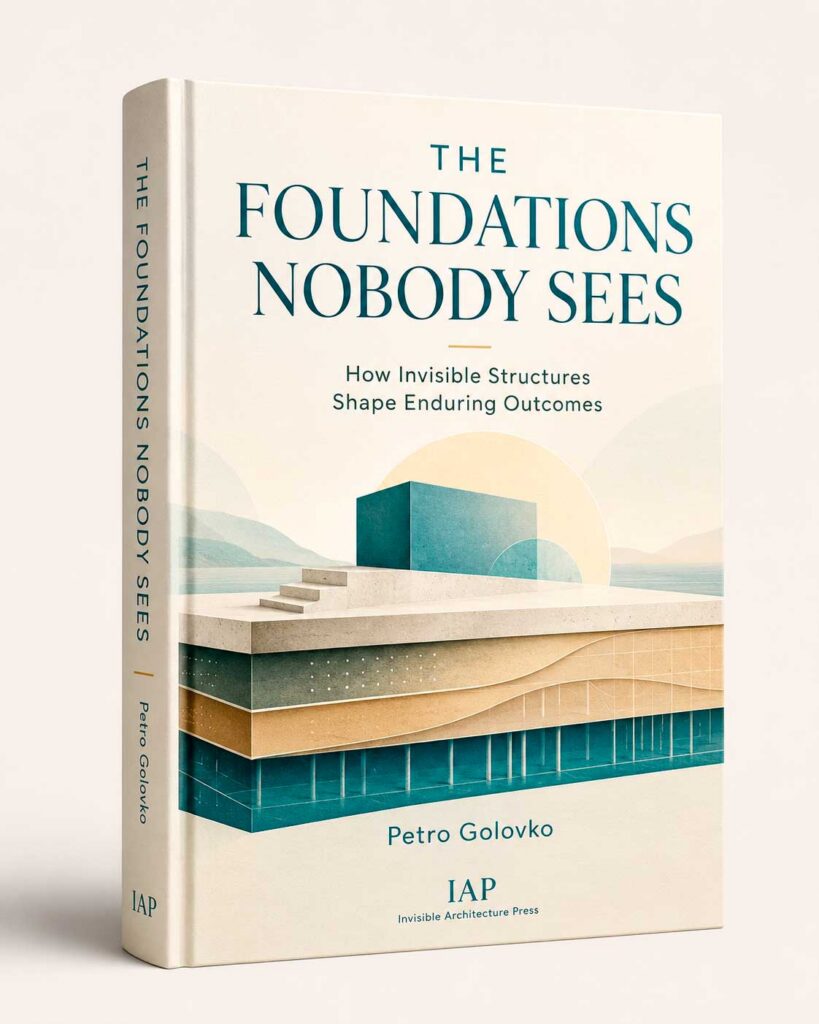
THE FOUNDATIONS NOBODY SEES

Institutions appear to rest on law, ownership, capital, and formal authority.

Their real durability depends on deeper structures: legitimacy, memory, judgement, relationships, and the capacity to preserve essential functions when certainty disappears.

This book examines the invisible foundations that determine whether an institution survives disruption or collapses beneath the weight of its own assumptions.

status

Forthcoming

format

Hardcover, eBook

Availability

To Be Announced

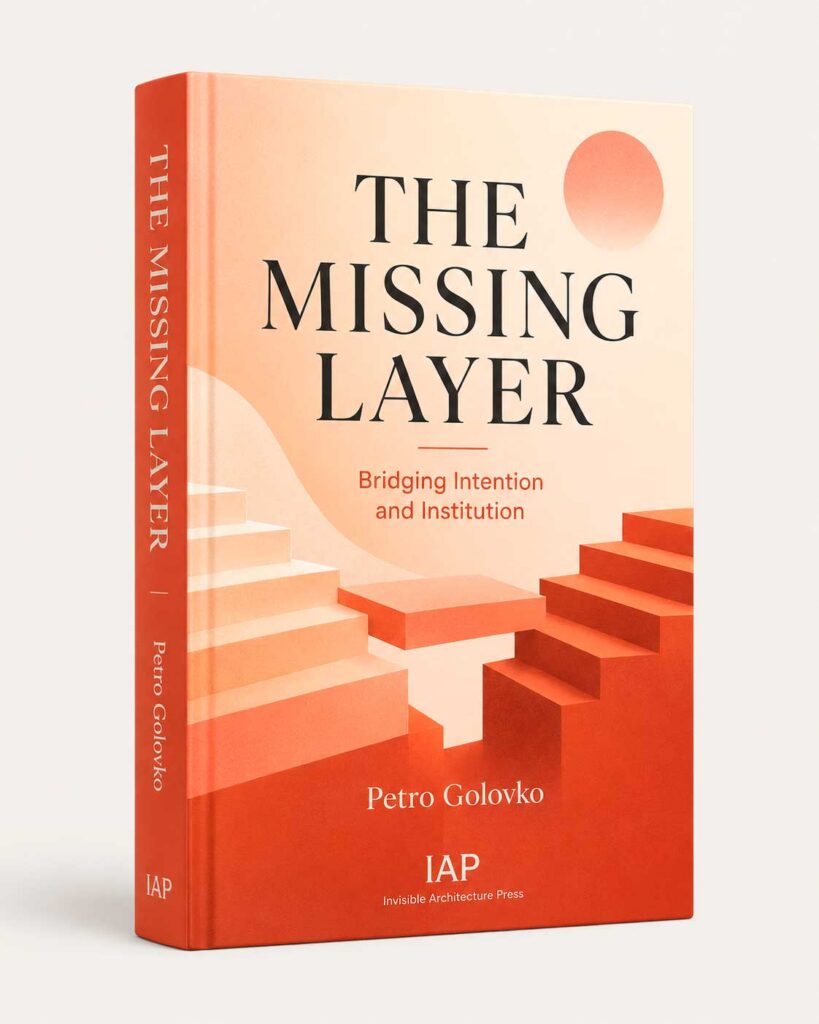
The Missing Layer

Modern financial infrastructure can move assets, record transactions, automate compliance, and execute instructions at extraordinary speed.

What it cannot yet do is understand the institution it serves.

This book identifies the missing layer between automation and judgement: an architecture capable of preserving reasoning, authority, relationships, and institutional memory across time.

status

Forthcoming

format

Hardcover, eBook

Availability

To Be Announced

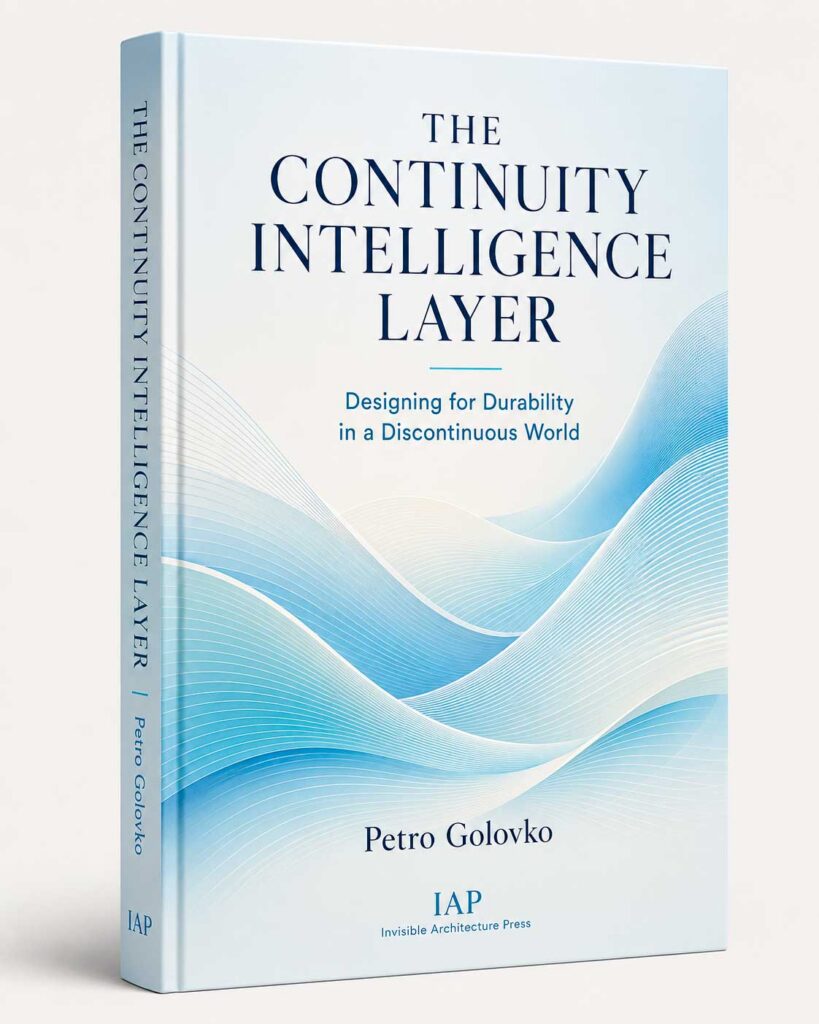
THE CONTINUITY INTELLIGENCE LAYER

Continuity is usually treated as succession planning, operational resilience, or disaster recovery.

That is too narrow.

This book reframes continuity as an intelligence problem. It develops a systematic architecture for preserving institutional reasoning, legitimate authority, decision coherence, and memory across leadership change, technological disruption, and structural transition.

status

Forthcoming

format

Hardcover, eBook

Availability

To Be Announced

More titles are in development

Our publishing programme grows from sustained independent research and long-term intellectual work.

Future titles will extend the study of institutional architecture, continuity, governance, trust, and the systems that preserve authority and reasoning across structural change.